header

Wednesday, October 28, 2015

Bubble Sticks

These speech and thought bubbles are so simple to make and FUN to use!

Make a large demo version to use during read alouds and shared reading...

make an inference & give evidence:
"What could Mrs. Wishy-Washy be thinking right now?
What makes you think that?"
turn & talk! ;)

Students can use the smaller versions during reading workshop as a reminder to stop, think, and talk in partnerships- so engaging!


You can build in more symbols throughout the year as reminders to extend thinking and talking about books...
Readers think about what's happening in the story
and the characters' feelings.
Readers can think about how the pages go together.
Readers can think about what's changing and why.

Happy reading!
Chrissa & Stefanie

Tuesday, October 13, 2015

The Name Chart

The student's name is likely the first word that they learn. They learn that it is written the same way each time and that it is made up of a sequence of letters, defined by space.
(McCarrier, Andrea, Gay S. Pinnell, and Irene C. Fountas. Interactive Writing. Portsmouth: Heinemann, 2000.)

It's so important and meaningful for our little ones to spend the first months of school studying their names to develop phonological awareness and explore concepts about print. Here are some ways to extend the Star Name work we wrote about in earlier posts...

As your students are studying Star Names each day, you can add them to a pocket chart for comparing and contrasting.

We searched for letters and
marked them with highlighting tape.

"What do you notice?"
Some things you might discuss or sort by: length of names, number of syllables, same first letter, same last letter, common sounds, common letters, common spelling patterns, rhyming names, etc.

These students are sorting names
by number of syllables in a literacy/word work station.

Teacher Tips for creating your class name chart:

*you can use the names from the pocket chart and glue them onto poster board or chart paper

*group common names by same first sound, not necessarily first letter (Caroline and Celina both begin with C, but they have different first sounds: /k/ vs. /s/)

*make the first letter (or first two letters for digraphs ex. Charlie) bold or a different color, especially to emphasize the concept of first in writing

*include students' pictures

*if you don't have names for the common sounds, you might include teachers' names or classroom pets' names

We added our class fish Red
to the name chart :) 

Some ways to use the name chart as a TOOL:

*During interactive writing, you might model using the name chart as a letter-sound correspondence tool, especially if students don't know all the letter sounds. For example: I want to write 'doctor', whose name begins with the same sound as 'doctor'? Axel? Briana? Christopher? Devin? Yes, doctor and Devin begin with the same first sound /d/...I can write a 'D' for doctor.) 

*Make small copies of the class name chart available for students to use independently: in your writing center, in their folders, or even in the book baggies of students who need 1:1 pointing practice, so they can point under and read each classmate's name.

Let us know if you have other suggestions!
Chrissa & Stefanie
:)

Tuesday, October 6, 2015

Star Student Book

If you're looking for an extension of the fantastic Star Student/Star Name routine in a previous post, then read on! :)

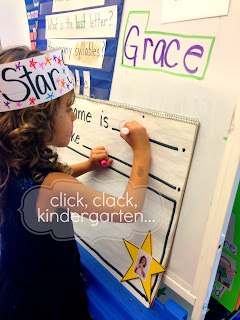
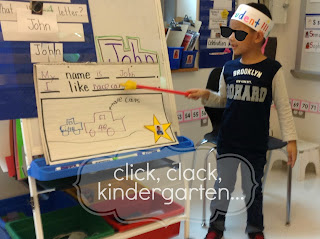
After investigating a student's name, we then create a book with a page for each star student via shared or interactive writing.

1. We start this process by interviewing our Star Student. You might have the class decide upon some interview questions that they will ask the star student of the day (ex. What do you like to do? What is your favorite movie? What is your favorite New York City building? etc.) This interview allows the class to get to know the star student as well as allows the star student an opportunity to communicate something that he/she "likes." Students are encouraged to do attentive listening as they learn about their classmates.

2. After the "interview", you pull out the small chart paper (see below). When you first start this book the sentences will be very scaffolded to support your learner and you will do most of the writing. We like to create patterned texts similar to books at guided reading Level B.

3. As time progresses, you will keep the same language pattern on each page, but slowly allow the students to write in more words ( i.e. My, is, I ), their names and the sounds they hear in what they say that they like. We refer to the keywords and letters on the Alphabet Chart or Word Wall. You can share the marker and write in missing letters so that the word is written with conventional spelling

4. You might encourage them to label their pictures with as many sounds they hear. Some might be able to label the whole word. This reflects what is happening in their writing during Writing Workshop as this time.

Our Star Student presenting his page the community.


Here our star student is writing her name,
as well as "I" and what she likes.
Students are beginning to write more words in the sentences.
You can hang them proudly around the room.
When you have completed a page for every student, you can bind the pages together to create a class book, such as Our Star Student Book by Class K-247, to reread for shared reading or for students to read on their own.

*Then you might also type up a small version of the Star Student Book and make copies for students' book baggies.


This is a great routine for you and your classroom community. It really allows for practicing so many rich skills in an authentic and exciting way. These skills include, but are not limited to, phonemic awareness, concepts of print, letter-sound correspondence, letter formation, writing conventions (capital letters, spacing, end punctuation), etc. It also celebrates all of your learners, their unique names and special interests.

:) We hope you and your little stars enjoy this routine,

S&C

Wednesday, September 30, 2015

Weather and Temperature Data Collection

Looking for an authentic and fun way to collect data in your Kindergarten class or homeschool setting? We have just the idea for you! :) This is such an exciting way for young mathematicians to collect and organize data daily as well as over time. The best part is that it is all driven by student observation and notation.


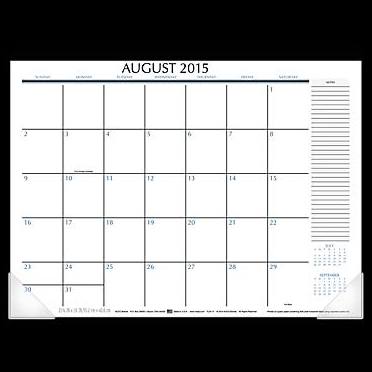
The materials can vary based on your current supplies and preference. You can get a large desk calendar like this one:

You can also use a sticky-notes on a blank calendar like the one above. Alternatively, you might create a calendar that can be reused by adjusting the month and days with the post-it notes.

When you have the materials ready to go...

A student can hold the "Weather Reporter" or "Meteorologist" job and draw the weather by observing how the sky looks each day. This job can rotate as you wish. It is important that this student then discusses and reports the weather of the day with the community. When the month is complete, you can have a discussion as a class, asking questions such as, "What type of weather did we have the most?" or "How many days were sunny?" Whichever questions you ask remember to follow it with: "How can we find out?" This will lead to a class conversation about authentic ways to organize the data to find out. This should be student-led, allowing them to suggest ways to categorize the data, for example, cutting the calendar apart so they can sort sunny, cloudy, rainy, etc. days.


We also use a temperature graph to record how it feels outside. Students might debate whether it feels 'very hot' vs. 'warm', but you can show them how to access the actual temperature online or on your phone. The temperature graphs are pre-made, but the consistent format supports students in noticing trends and data change over extended time (many months as in the photo above). You can download it FREE in our TPT store!


Remember that these are great ways to promote autonomy with student jobs while also supporting your sense of community buy-in and decision making. 

We hope this is useful and that you and yours have many sunny days ahead! :)

Together in Learning, 
S&C

Sunday, September 27, 2015

Letter and Keyword Matching Cards

Download our FREE Letter and Keyword Matching Cards as featured in the Teachers College Reading and Writing Project's Instagram photo!


They go perfectly with our other Alphabet resources that are available in our TPT store!


Vocabulary Charts

Many of our classes consisted of 85+% beginner & intermediate English Language Learners, so we needed to use charts with common pictures and words throughout the day. Even a simple question such as "What do you like?" required a chart so students could point to a picture and we could help them to say "I like to [sing]." When we read aloud books with unfamiliar words, such as "Charlie was devastated when his best friend moved away, " we would refer to the "How sad?" chart.

Charts can be made with:
  • photos of students
  • student or teacher drawings
  • pictures from familiar books
  • clip art or photo images
You might even add the words via shared or interactive writing if you can.

Here are some examples...

*We needed charts with common nouns ("People We Love"; "Places We Go") and verbs:

*They especially love the charts with removable words!
these words have Velcro on the back;
great for storytelling and how-to writing

*Ken Pransky's book My Fantastic Words Book, a student thesaurus, is the perfect resource for word lists of kid-friendly synonyms and antonyms.

these charts show feelings by degrees of intensity
size words
*Make the charts accessible in table baskets, binders, or sorted in the Writing Center.


More examples to come!
C&S

Wednesday, September 23, 2015

Ready... Set..... Writing Workshop!

Hey Everyone! 
We are only 8 days into the school year and Writing Workshop is in full swing! These kindergarten writers are so excited to write and share their stories with each other. It is so fun to see the little ones so engaged and wrapped up in their writing.

Stay tuned as our classroom community of writers grows! 

not pictured: soft classical music ;)

writing center

paper choices

Happy writing,
Stefanie & Chrissa